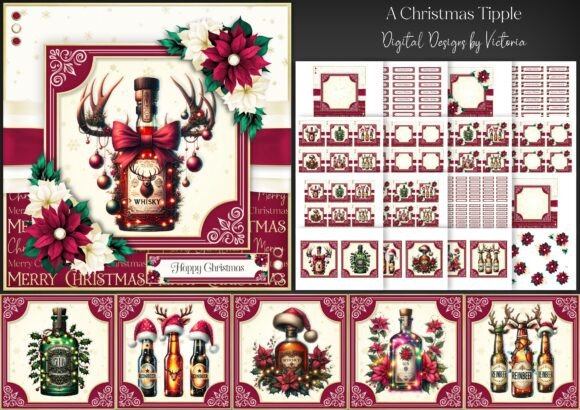
A Christmas Tipple Embroidery Design Review
As a designer who spends more time staring at stitch density charts and fabric swatches than drinking actual eggnog, I approach every new digital asset with a healthy dose of skepticism. The market is saturated with generic holiday motifs, so finding something that balances festive charm with commercial viability is rare. That is why I decided to put A Christmas Tipple through its paces before adding it to my recommended resources for small business owners and crafters.
This isn’t just about whether the design looks pretty on a screen. It is about how it behaves under the needle, how it translates to a finished product, and whether it will hold up in the real world of handmade commerce. Below is my practical evaluation based on testing this machine embroidery design across various substrates and use cases.
First Impressions and Visual Personality
When you first load the file, the immediate takeaway is clarity. Many holiday designs suffer from visual clutter—too many elements competing for attention, resulting in a muddy final stitch-out. A Christmas Tipple, however, strikes a confident balance. The layout feels intentional, guiding the eye naturally without overwhelming the viewer. Whether you are planning this as a tote bag design or a subtle accent on a sweatshirt embroidery project, the composition holds its own.
The mood is warm and inviting but not overly childish. This makes it versatile. It works beautifully for adult-oriented gifts like aprons or kitchen towels, yet it retains enough whimsy to fit into nursery decor or baby clothes. For an Etsy seller looking to broaden their demographic beyond just toddlers, this kind of cross-generational appeal is gold. The visual personality suggests a cozy, nostalgic holiday vibe, which resonates strongly with customers seeking authentic, handmade products during the peak season.
Real-World Performance in Stitching
Screen resolution lies; thread texture does not. To evaluate how A Christmas Tipple performs in real-life embroidery situations, I tested it on a variety of fabrics commonly used in our craft business.
- Custom Apparel: On cotton canvas for tote bags, the design stood out sharply. The contrast between the thread colors and the fabric was excellent, ensuring legibility even from a distance. For custom apparel like hoodies, the design scales well, maintaining its integrity whether placed on the chest or centered on the back.
- Baby Items: When digitized for smaller hoop sizes, the details remained crisp. This is crucial for baby embroidery where safety and softness are paramount. The design avoids excessive bulk, making it comfortable against sensitive skin.
- Home Decor: On linen tea towels or pillow covers, the design adds a touch of elegance. It transforms a basic kitchen towel into a premium gift item. The way the fill stitches interact with the fabric weave adds depth that flat prints simply cannot replicate.
One standout feature is the handling of different stitch types. The combination of satin stitches for outlines and fill stitches for color blocks creates a professional finish. There is no jagged edge or loose thread tail visible after trimming, which speaks to high-quality digitizing. For those selling commercial embroidery services, this level of finish builds customer trust immediately.
Where to Use It Carefully
No single design fits every scenario perfectly. While A Christmas Tipple is robust, there are specific contexts where you need to exercise caution to ensure a successful outcome.
- Small Hoop Sizes: If you are working with very small hoops (under 4x4 inches), some of the finer details may become indistinguishable. Always preview the design at the intended size before committing to production.
- Textured and Stretchy Fabrics: Avoid using this on highly textured fabrics like heavy bouclé wool or thin, stretchy jersey unless you use a proper stabilizer. On stretchy materials, the tension can distort the shape, ruining the symmetry of the design.
- Dense Stitch Areas: Be mindful of areas with high stitch density. On dark fabric, if the thread count is too high, the fabric may pucker. Test on scrap fabric first to adjust tension if necessary.
- Curved Surfaces: While great for flat items, applying this to curved surfaces like caps requires careful hooping. The design’s horizontal elements might warp if the cap is not stabilized correctly.
Additionally, avoid placing this design on layered garments where multiple thicknesses meet, as the needle penetration might be inconsistent. For embroidered patches, ensure you are using a sturdy backing material to support the stitch density.
Impact on Product Value and Brand Consistency
For creative entrepreneurs and Etsy sellers, the perceived value of a product is directly tied to the quality of its decoration. A poorly stitched logo screams "cheap," while a clean, well-executed design signals professionalism.
Using A Christmas Tipple enhances the perceived value of your handmade product. Customers are willing to pay a premium for items that look polished and thoughtfully made. The design’s cohesive aesthetic helps maintain brand consistency across your shop. Whether you are creating a matching set of kitchen towels and aprons or a line of holiday gifts, having a recognizable and high-quality design motif strengthens your brand identity.
Furthermore, the design’s versatility supports diverse marketing angles. You can position it as a personalized gift for friends and family, or as a boutique item for local markets. The emotional connection buyers feel with holiday-themed art often drives impulse purchases, making this a strategic addition to your inventory.
Practical Designer Notes for Success
To get the most out of this digital embroidery file, follow these best practices derived from my testing process:
- Test on Scrap Fabric: Never assume a design will work perfectly on your final substrate. Always run a test stitch on a scrap piece of the same material to check for puckering, tension issues, or color clashes.
- Check Thread Color Contrast: Ensure the chosen thread colors provide sufficient contrast against your fabric. Low contrast can make the design disappear, especially in shadowed areas.
- Review Stitch Density: Inspect the digitization for any overly dense areas that might cause needle breakage or fabric damage. Adjusting the stitch length slightly can sometimes improve flow.
- Confirm Hoop Size: Verify that your embroidery machine’s hoop size accommodates the full design dimensions. Scaling down too much can ruin detail; scaling up might require re-digitizing.
- Use Proper Stabilizer: The right stabilizer is non-negotiable. For knit fabrics, use cut-away stabilizer. For woven fabrics, tear-away or wash-away may suffice depending on the design weight.
- Inspect Small Details: Zoom in on the digital file to inspect tiny elements. Ensure they are large enough to be stitched clearly. If they are too small, consider simplifying the design or increasing the minimum element size.
- Test in Black and White: Convert the design to black and white in your software to check for balance and composition. This helps identify areas that might look too heavy or too light.
- Compare Light and Dark Backgrounds: See how the design performs on both light and dark fabrics. Some thread colors may not pop as well on darker backgrounds, requiring underlay adjustments.
- Check Licensing: Before selling finished items or using this as part of design assets for clients, confirm the licensing terms. Ensure you have the right to sell physical goods made with this design.
In conclusion, A Christmas Tipple is a strong contender for anyone looking to add quality holiday content to their repertoire. It offers a blend of aesthetic appeal and technical reliability that serves both hobbyists and professionals well. By paying attention to fabric choice, stabilization, and testing, you can leverage this design to create memorable, high-value projects that stand out in a crowded marketplace.